
 Digital Society Lab
Polimeter
TL;DR
Polimeter lets citizens and journalists check whether governing parties keep their campaign promises.
I led the end-to-end rebuild across desktop, tablet, and mobile, turning an expert research tool into something anyone can read at a glance. Shipped in 2026, it tracks 1,891 promises for 1,000+ monthly users. See the live site →
Background
A tool that outgrew its interface
Polimeter's interface hadn't kept pace with its growing audience or its 2011 mission of making dense political data trustworthy for non-experts. The Managing Director brought me in to lead the rebuild.
Problem
Four problems across two audit tracks
I ran a design audit and a methodology consultation with domain experts in parallel. Both surfaced usability issues that were also misrepresentation problems. I also had to make sure the methodology stayed intact while simplifying the interface.


Hover cards to explore
User patterns
- Journalists Deep engagement
Researching specific promises, policy areas, or governments. Need access to evidence and full update histories. - Citizens Surface engagement
Checking high-level political performance briefly, often without prior context.
Process
Easy to scan and deep enough to trust
Restructuring the information hierarchy
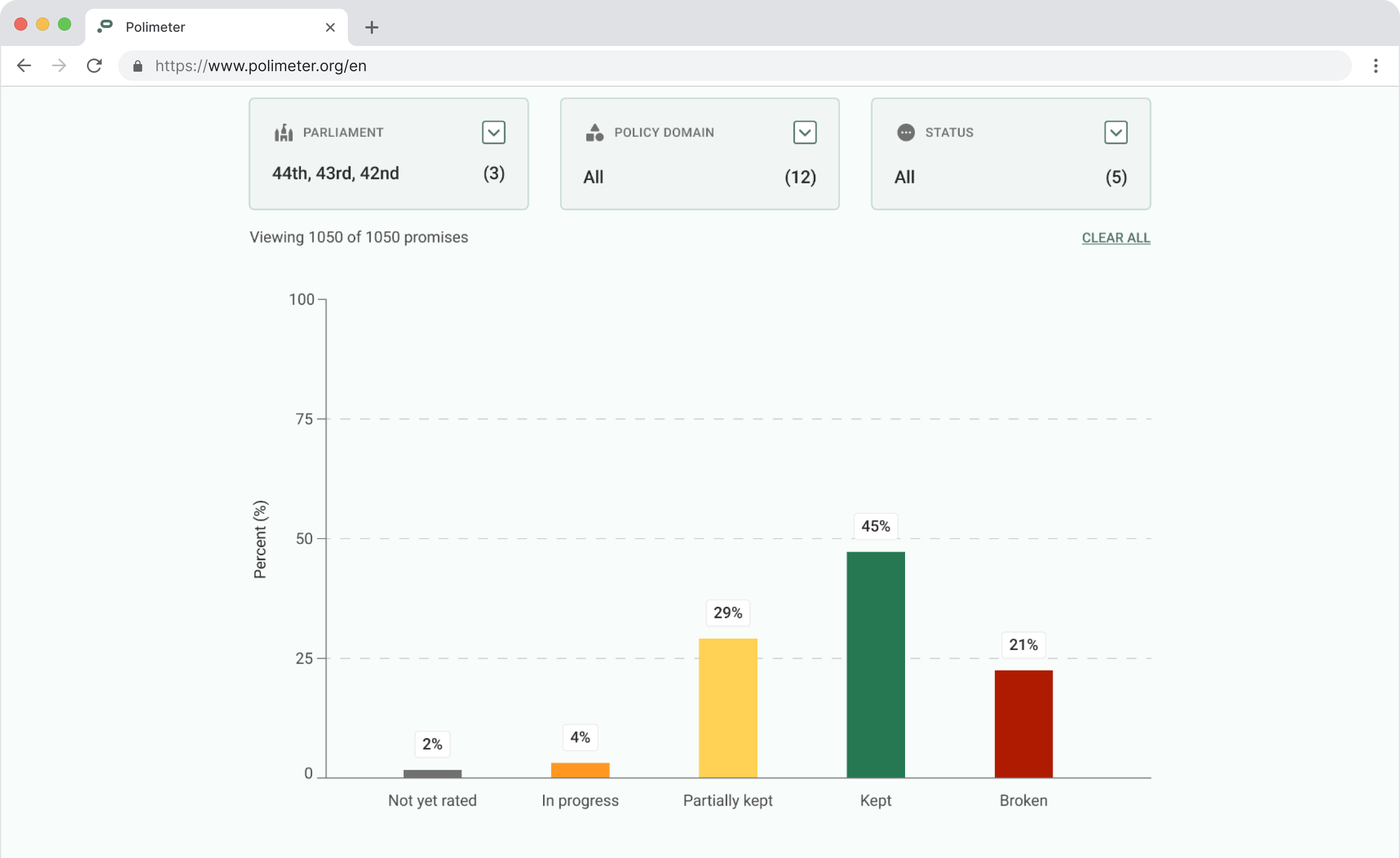
On the Promise Tracker page, the tri-column layout gave overview data, promises, and filters equal weight, with no signal on what to look at first. Moving to single column sequences the page from broad context down to specific promises.
Overview
Jurisdiction, party, and tenure.
Promise breakdown
Status chart with parliament, policy, and status filters.
Promise list
The full list with search, sort, and group controls inline.
A chart that judges each term on its own
The original chart conflated separate mandates into one record. A strong previous term inflated current performance, and a new term inherited promises that didn't belong to it.
I explored three directions: segmented area charts, grouped bars, and stacked bars.
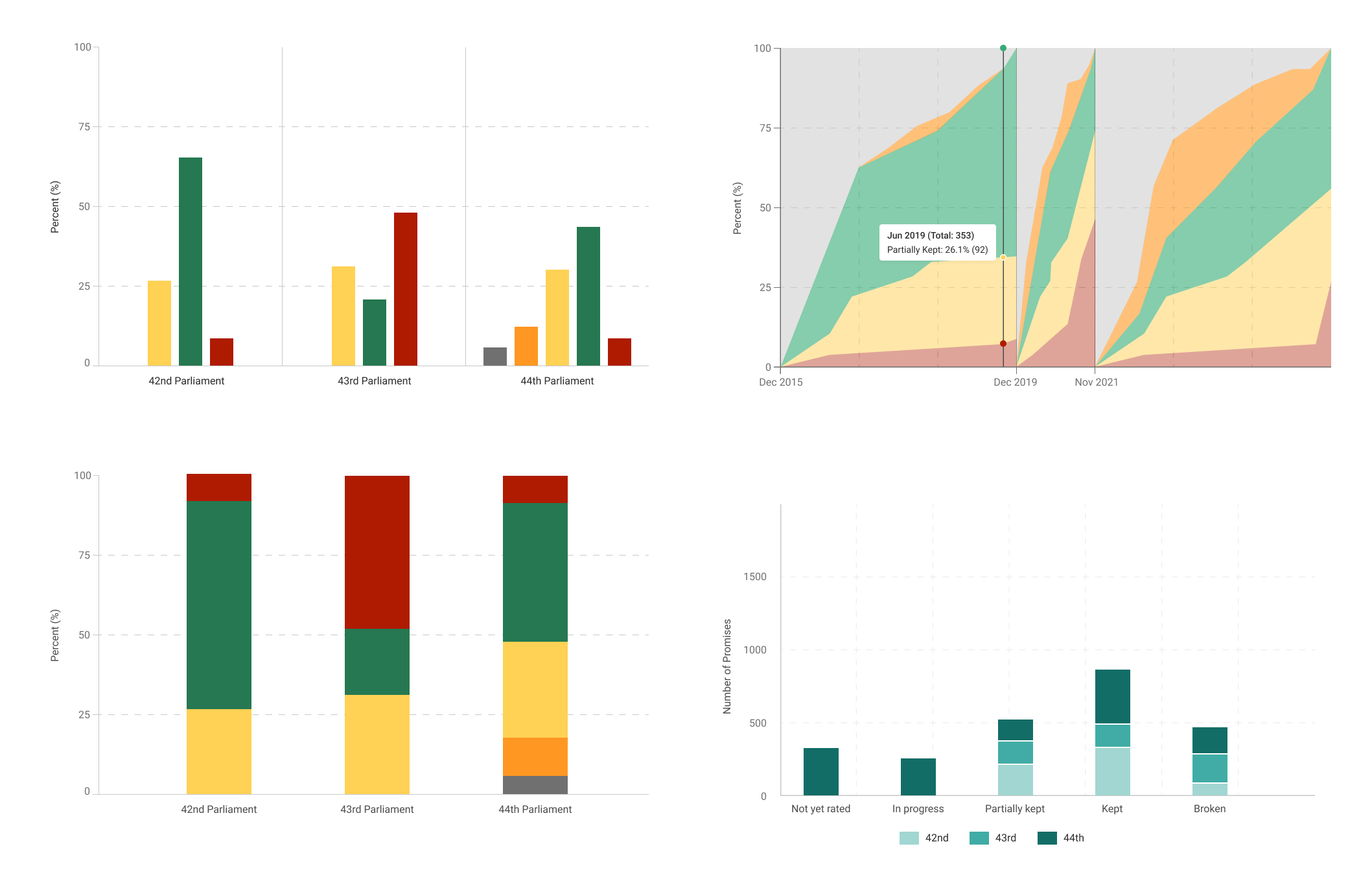
early explorations
The breakthrough was reframing the axis. Instead of organizing around time, I used the five status categories, with parliament term as a filter. The chart had to show how a government is doing on its promises instantly.
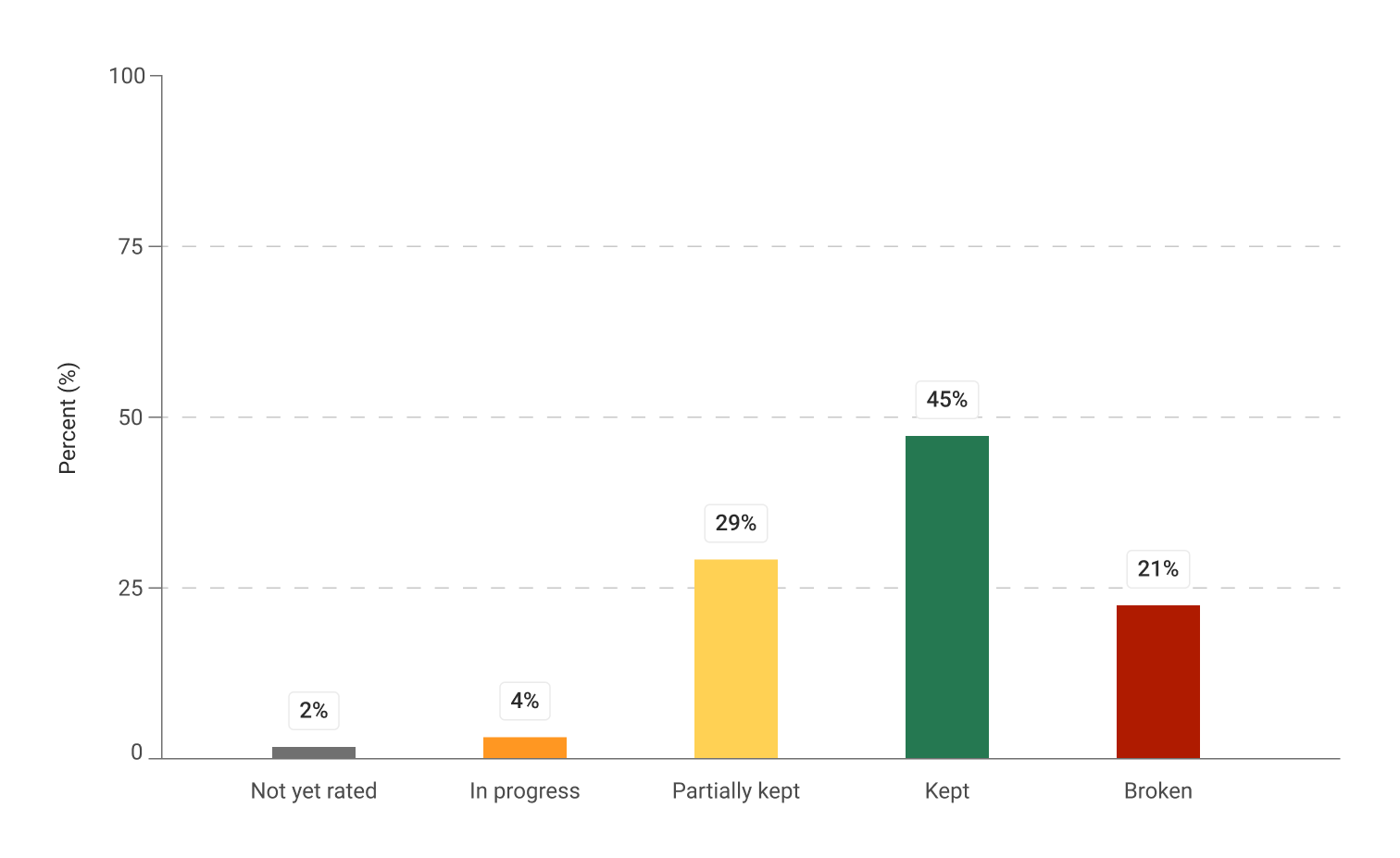
final design
The evidence trail, made readable
Journalists needed to drill into individual promises for the full evidentiary trail, but the original page surfaced everything at once with no hierarchy.
Click to expand / collapse

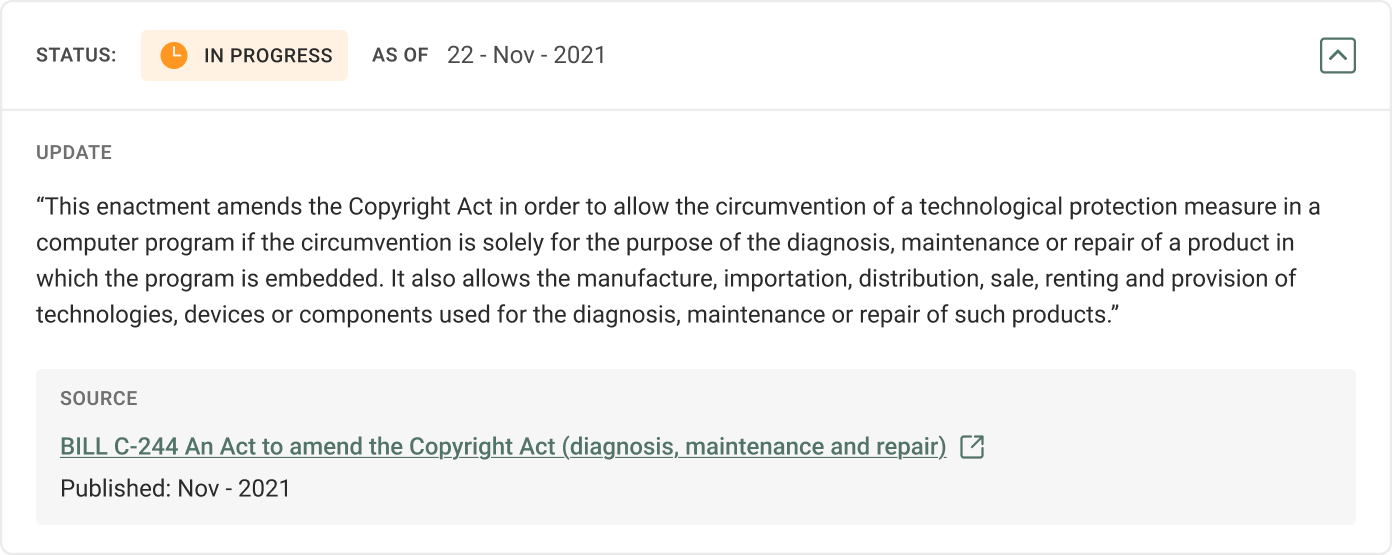
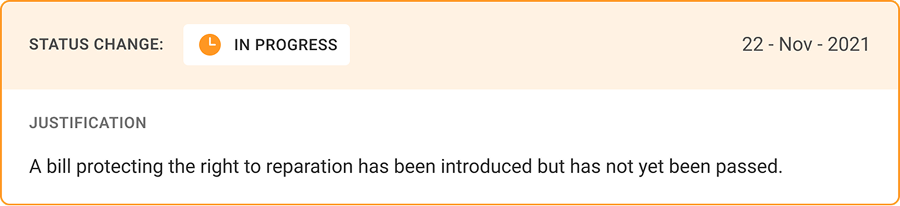
The updated design keeps the vertical timeline (recent to oldest), but now has clear event markers and labeled blocks. Update cards are collapsed by default but expandable, supporting both quick scans and deep inspection.
Expert testing for validation
I ran usability sessions with 4 lab members. The expert sessions were most valuable, surfacing issues on the promise history page around timeline navigation.
“I thought the dates were newest at the top, but I couldn’t tell if this was a new promise or an update to an old one.”— Domain expert, internal usability session
Final Product
The structural shift, before and after
Homepage
Jurisdictions became the primary content, lightening the page. Each card shows the essential overview data. The rebuild also unifies the homepage with the rest of the site's design system.
Toggle to compare

Promise Tracker
The page is now single-column. Filters were redesigned into two groups: three promise filter categories and sort/group controls.
Toggle to compare
Promise History
The promise sits in a distinct card at the top, with a labeled timeline of updates below. Each event is labeled by type, and updates are collapsed by default.
Toggle to compare

Design system
Built for consistency across pages, clean handoff, and future iteration.
Typefaces
Status Badges





Colors
Across breakpoints
The single-column structure carries across breakpoints, addressing the mobile issue surfaced in the audit.


Impact
Rebuild is live
The rebuild shipped at polimeter.org. Stakeholders and the methodology team confirmed it preserved scientific rigor while significantly improving public legibility.
I designed and documented the rebuild end-to-end, and supported the development team through the early build before transitioning out to pursue graduate studies.
1,891
Promises tracked
1,000+
Monthly users
Reflections
Domain knowledge as design material
Designing in this specialized environment meant learning the data, the methodology, and how to translate intent visually. This kind of understanding came through working closely with the political scientists, in a way no design framework could replicate.
Open questions on external validation
Internal testing conveniently covered expert and non-expert perspectives, but has its limits. Testing with actual citizens and journalists would reveal whether the conceptual reframes (especially the new chart and promise history flow) land as intended, or still needs refinement.
thanks for reading (✿・‿・)ノ゛
Up next
 Reddit
 Zendesk